Lucky Pinball — Pegs, Bumpers and the Category Question
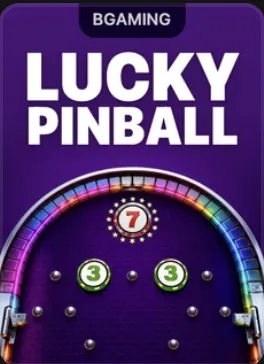
Lucky Pinball stands out among the eight Eurogold titles on this site because it does not look like a reel game at all. The artwork shows a dark-purple board under a rainbow neon arc, a grid of shiny metal pegs and round bumpers marked with a lucky 7 and two 3s. It is the visual language of pinball and of the peg-board games often called plinko or pachinko. For the cashier, this format raises one specific question that classic slots do not: where does the game sit in the bonus rules?
What the format usually means
In a ball-drop game, a ball falls through pegs and lands in a slot or hits a target that carries a multiplier. A round is short, often only a few seconds, and you can play many of them quickly. That pace is the main thing to manage: small stakes add up faster than they do in a slower game. The precise rules of Lucky Pinball — how the board is set, how bumpers pay, whether there are risk levels — are in its help screen, and that screen is the authority, not our description of the cover.
The category question
Bonus terms rarely mention individual games by name. They speak in categories: slots, table games, live casino and, quite often, a category for instant, arcade or other games. A ball-drop game can land in any of them, and the category decides:
- how much of each stake counts toward the wagering requirement, from full contribution to none at all;
- whether the game may be played with an active bonus at all;
- which maximum stake applies while bonus funds are in play.
If you cannot tell which category Lucky Pinball belongs to, ask the operator’s support and keep the written answer. It is the easiest way to avoid a dispute later, and it is useful evidence if one arises. Our complaints guide explains why written answers matter.
Fast rounds, a careful budget
Because one round takes seconds, the time limit is as important as the money limit. Set both before you start, and consider using a session reminder if the operator’s account settings provide one. A game you can play two hundred times in ten minutes is easy to overplay without noticing.
Turning a win into a withdrawal
Wins are credited to your balance like any other. To withdraw, your account must be verified, any bonus must be either completed or forfeited according to its terms, and you need a withdrawal method the cashier offers for your account. Then you submit a request and follow its status as described in the withdrawal guide. The set of methods and the limits depend on the operator and your account — check them in the cashier.